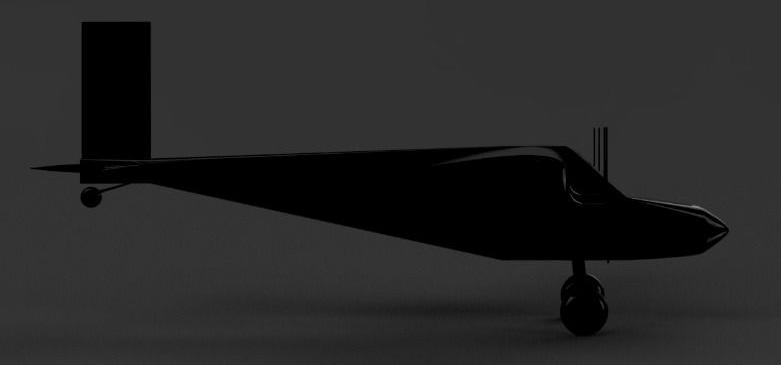
Structural design and analysis of a hybrid-electric STOL light aircraft airframe, carried out as part of the RAeS Innovative Light Aircraft Design (ILAD) 2025/26 competition. Building on the STOLVOLT FIRESPIKE conceptual design, the work covers structural layout in 3DExperience, aerodynamic load analysis in XFLR5, and FEM verification in Abaqus — with a focus on lightweight composite construction.
Goals
- Develop a detailed structural layout for the airframe based on the existing conceptual design
- Analyse aerodynamic loads using XFLR5 and derive structural design loads
- Design and dimension key structural components in 3DExperience
- Verify structural integrity through finite element analysis in Abaqus
- Establish a mass budget and optimise the structure for minimum weight
- Participate in the RAeS ILAD 2025/26 competition
Methodology
Aerodynamic Load Analysis
Aerodynamic forces acting on the aircraft are analysed using XFLR5, a tool for the aerodynamic analysis of airfoils, wings, and complete aircraft configurations. Lift distributions, load factors, and critical load cases are derived for the structural sizing process.
Structural Design
The airframe structure is designed in 3DExperience, the Dassault Systèmes platform used for both CAD modelling and structural layout. The design encompasses the primary load-bearing structure including fuselage frames, wing spars, ribs, and skin panels — with an emphasis on composite materials to meet the lightweight construction goals.
Finite Element Analysis
Structural analysis is performed in Abaqus, a high-end FEM solver suited for composite structures and complex load scenarios. Critical components are analysed under the derived design load cases to verify stress levels, deformations, and safety margins.
RAeS Competition
The RAeS Innovative Light Aircraft Design competition challenges university teams to develop a viable concept for an innovative light aircraft. The FIRESPIKE entry is a hybrid-electric STOL design aimed at combining short-field capability with meaningful range, targeting the emerging market for regional point-to-point air travel.
The competition involves a full written report and a formal presentation to a panel of industry judges from the Royal Aeronautical Society.
Results
Results will be added upon completion of the thesis (July 2026).